CMPA Rash, Hives and Eczema in Babies: What Parents Should Know
Can milk allergy cause a rash, hives or eczema in a baby? Learn which skin reactions are described, why eczema alone isn't proof, and when to get urgent help.
7 min read
Written by CMPA Baby Editorial Team. Source-checked November 2026. Not a substitute for medical advice.

Skin is often where parents first wonder about cow's milk protein allergy (CMPA). A CMPA rash can take more than one form: hives or swelling that appear soon after milk, or eczema that flares over the following day or two. Skin symptoms are in fact the most common way milk allergy shows itself, according to the European ESPGHAN position paper.[3] But rashes and eczema are also very common in babies who have no food allergy at all, so a skin change on its own does not tell you the cause.[3][6]
This guide explains which skin reactions are described in milk allergy, why eczema by itself is not proof of CMPA, what to photograph and write down, and which signs need urgent care. For the wider picture, see early signs of CMPA.
Can CMPA cause a rash or skin reaction in a baby?
Yes. ESPGHAN lists urticaria (hives), angioedema (swelling) and atopic eczema among the skin signs of cow's milk allergy, and notes that none of these symptoms is specific to it.[3] NICE groups possible food-allergy skin signs by how quickly they appear.[1]
Immediate reactions: hives and swelling
In IgE-mediated (immediate) allergy, NICE describes itching, redness, acute hives anywhere on the body and acute swelling, most often of the lips, face and around the eyes.[1] The NHS says these reactions usually start within a few minutes of a food, though they can take up to two hours.[4] Hives look like raised, itchy bumps or patches in many shapes and sizes; on brown and black skin they can be harder to see than the pink or red patches seen on white skin.[5]
Delayed reactions: eczema flares
In non-IgE-mediated (delayed) allergy, NICE lists itching, redness and atopic eczema.[1] The British Association of Dermatologists describes delayed reactions as happening within a day or two of the food and lasting a few days, sometimes alongside tummy symptoms such as pain, constipation or diarrhoea.[6] For cow's milk, the NHS notes symptoms can take up to three days to appear.[4] That delay is exactly why a skin flare is hard to link to any one feed.
Why eczema alone does not mean milk allergy
Eczema is very common: the British Association of Dermatologists estimates it affects one in five children in the UK, and most have mild symptoms.[6] Eczema and food allergy are linked, but the same leaflet explains that research shows eczema tends to come first, and that the allergy does not cause the eczema. Flares often happen without any specific trigger, or after viral illnesses, detergents, weather changes, pollen or house dust mites.[6] Hives also have many causes besides food, including infections, heat, sweating and pressure on the skin.[5]
Guidelines describe when a food allergy assessment is worth considering in a baby with eczema:
- NICE suggests considering food allergy in children with eczema who have had immediate symptoms after a particular food, and in babies and young children with moderate or severe eczema that has not been controlled by optimum management, particularly with colic, vomiting, altered bowel habit or poor growth.[2]
- NICE also advises considering food allergy when eczema does not respond adequately to treatment.[1]
- US guidelines from the NIAID expert panel suggest that children under five with moderate to severe eczema be considered for food allergy evaluation if the eczema persists in spite of optimized management and topical therapy.[9]
By contrast, NICE says parents of children with mild eczema can be reassured that most of these children do not need allergy tests, and advises against high-street or internet allergy tests.[2] Skin and blood allergy tests also need specialist interpretation: a positive result does not, on its own, mean a child is allergic.[6]
The CMPA Baby app, free on iPhone
Keep the photos and notes in one place
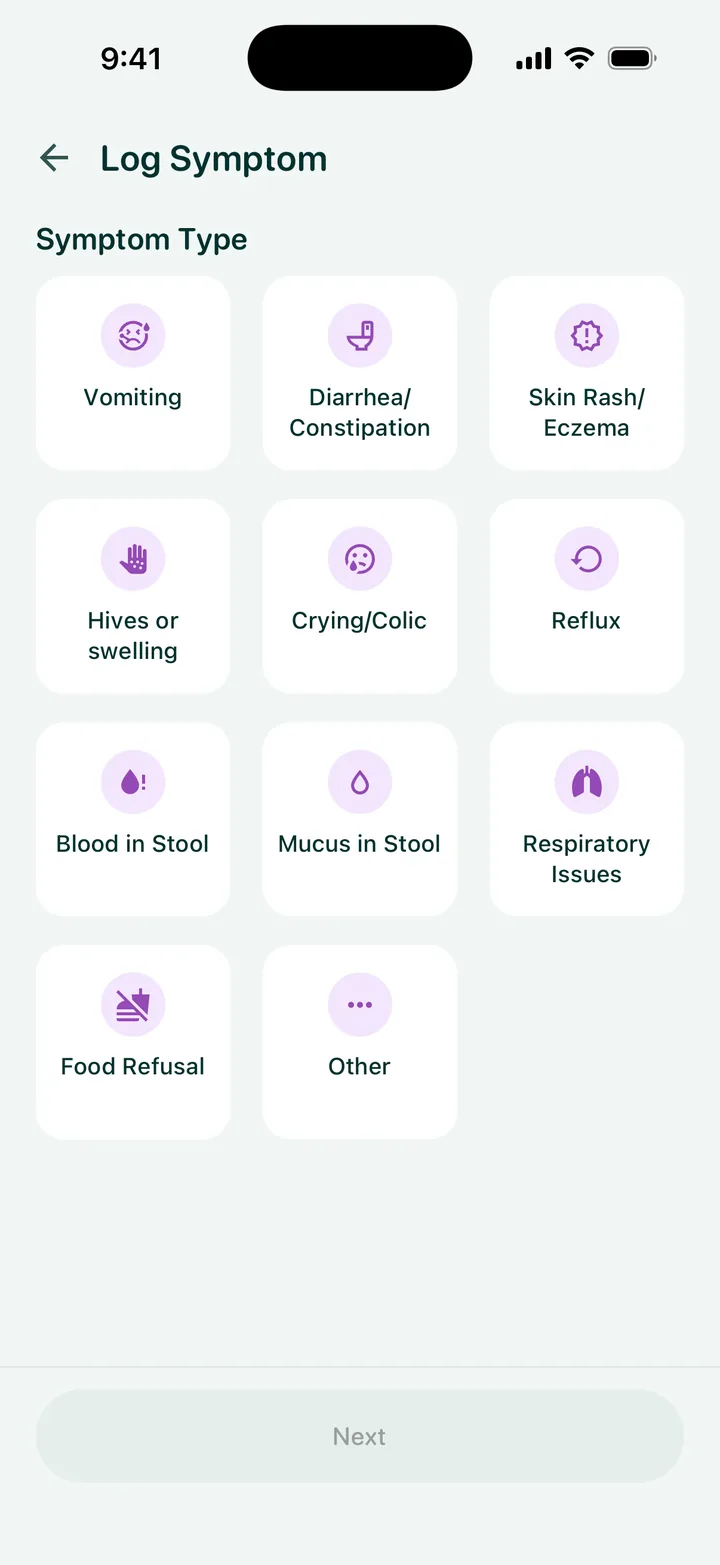
Rashes fade before appointments. Log meals and symptoms with a photo in under a minute, then show your clinician the dates and times instead of describing them from memory.
Get CMPA BabyDo not start an elimination diet for eczema on your own
Please do not remove milk or other foods from your baby's diet, or from your own diet while breastfeeding, to see whether the eczema improves. The NHS eczema guidance says not to change your diet unless a doctor tells you to, including if you are breastfeeding a baby with eczema.[7] The 2023 AAAAI/ACAAI eczema guideline suggests against elimination diets for eczema.[8] The British Association of Dermatologists warns that excluding foods without good reason can increase the risk of developing immediate, potentially dangerous reactions to those foods, and that many children on elimination diets miss essential nutrients.[6]
If your clinician does suspect milk allergy, they will plan any diagnostic diet with you. NICE describes a time-limited trial of eliminating the suspected allergen followed by reintroduction, with advice from a dietitian, and for bottle-fed babies under six months with moderate or severe eczema not controlled by emollients and mild steroid creams, a trial of a specialist formula.[1][2] ESPGHAN notes that eczema may take longer to improve during such a trial, and that improvement may also be its natural course.[3] These are decisions for your child's clinician and pediatric dietitian, not a home experiment. Our guide on how CMPA is diagnosed explains the process.
When to seek urgent help for a rash or eczema
Possible anaphylaxis is an emergency. Sudden swelling of the lips, mouth, tongue or throat, fast or difficult breathing, blue, grey or pale skin or lips, or a baby who becomes limp, floppy or unresponsive can be signs, especially alongside hives or a swollen rash.[5][10] If your baby has prescribed epinephrine (adrenaline), use it immediately as instructed, then call emergency services: 911 in the US, 999 in the UK or your local number. Call even if your baby seems to improve. Do not stop to take photos first.[10]
Get urgent medical advice the same day (in the UK, an urgent GP appointment or NHS 111) if eczema becomes blistered, crusty, weeping or has pus-filled spots, is painful, swollen or warm, suddenly gets worse or spreads, or your baby has a high temperature or seems unwell. The NHS says these can be signs of infection or of eczema herpeticum, a more serious condition.[7] NICE advises same-day specialist referral when eczema herpeticum is suspected.[2] The NHS also advises urgent advice if hives have not improved after two days, and checking with a pharmacist before giving a young child antihistamines.[5]
For ongoing eczema or rashes without those signs, book a routine review, and mention any feeding or tummy symptoms too.

What to photograph and record about your baby's skin
Rashes and hives can fade before an appointment, so a clear photo can show the clinician what you saw. Take it in daylight if possible, include a whole area of the body as well as a closer view, and note the date and time. NICE's allergy-focused history covers when symptoms started, how long they last, how often they happen, how severe they are and what your baby was fed, including the breastfeeding parent's diet.[11][1] This template keeps those details together without deciding the cause:
| Detail | What to note |
|---|---|
| When it appeared | Date and time you first noticed it, and the time of the last feed or meal. |
| What it looked like | Raised bumps, dry or rough patches, weeping or crusting, swelling; where on the body; whether it spread. |
| How long it lasted | Minutes, hours or days, and whether it came and went. |
| Itch and comfort | Scratching, rubbing, disturbed sleep, fussiness. |
| Other symptoms | Vomiting, stool changes, cough or wheeze, fever, cold symptoms, or none. |
| What was new | New foods or formula, a new soap, detergent or cream, heat, illness, teething. |
| Treatment used | Emollients or prescribed creams, how often, and whether the skin changed afterward. |
| Photo | File name or date of the photo, taken in good light. |
Recording what was new helps the clinician weigh other explanations, not only milk. Our CMPA symptom tracking guide shows how to keep a longer diary. If you prefer your phone, the CMPA Baby app lets you log meals and symptoms with photos and prepare notes for the visit; it does not diagnose or say what is causing the rash.

Questions to ask at the appointment
- How severe is my baby's eczema, and is it controlled? Ask how you can tell whether treatment is working.
- Is a food allergy assessment worth considering here, and why? Ask what in the history makes it more or less likely.
- If allergy is suspected, who will plan the next step? Ask whether a dietitian or allergy service should be involved before any diet change.
- What should prompt urgent contact? Write down the service to call and the signs to watch for.
The pediatrician appointment checklist can help you prepare the rest of the visit.
Frequently asked questions
What does a CMPA rash look like on a baby?
Can CMPA cause hives in babies?
Is baby eczema a sign of cow's milk protein allergy?
How does CMPA affect a baby's skin in delayed reactions?
Should I cut out milk to see if my baby's eczema improves?
Sources
- Food allergy in under 19s: assessment and diagnosis (CG116), recommendations. NICE.
- Atopic eczema in under 12s: diagnosis and management (CG57), recommendations. NICE.
- ESPGHAN position paper on the diagnosis, management and prevention of cow's milk allergy. ESPGHAN / Journal of Pediatric Gastroenterology and Nutrition, 2024.
- Food allergies in babies and young children. NHS, 2024.
- Hives. NHS.
- Food allergy and eczema in children and young people (patient information leaflet). British Association of Dermatologists / BSPAD, 2024.
- Atopic eczema. NHS.
- New guidelines released for practitioners treating anaphylaxis and atopic dermatitis (AAAAI/ACAAI Joint Task Force). ACAAI, 2023.
- Guidelines for the Diagnosis and Management of Food Allergy in the United States: summary of the NIAID-sponsored expert panel report. NIAID / National Institutes of Health, 2010.
- Anaphylaxis. NHS, 2023.
- Food allergy: allergy-focused clinical history (QS118). NICE.